Sizes, codes and marks
Category · 8 entries · Updated
Pipe sizes are names, not measurements, and the letters printed along a pipe say which standards it meets. These entries decode sizes, the NSF/ANSI marks for drinking water, lead-free rules and the model plumbing codes that states and cities adopt.
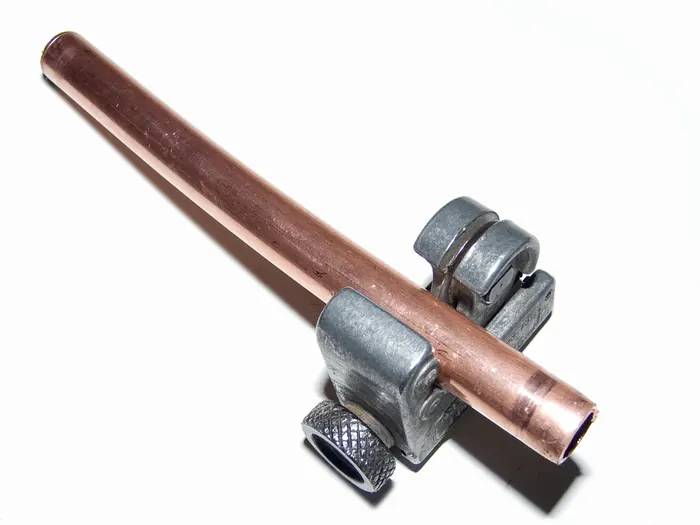
Entries in this category
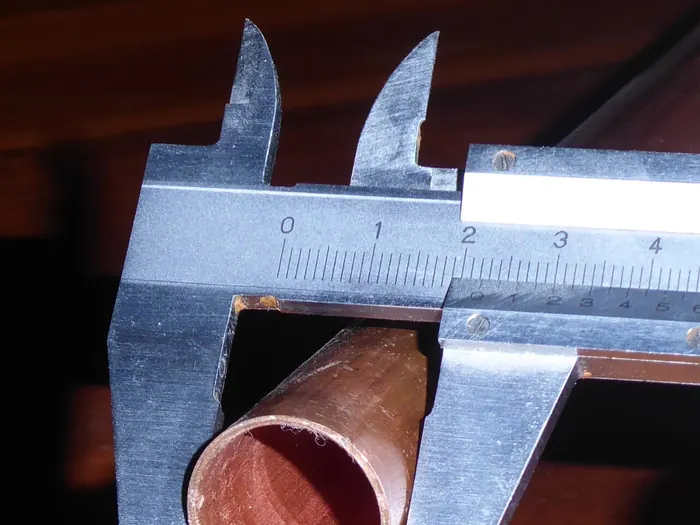 Nominal pipe size, CTS and IPSWhy pipe sizes are names rather than measurements, and how the CTS and IPS outside-diameter systems differ for the same nominal size.
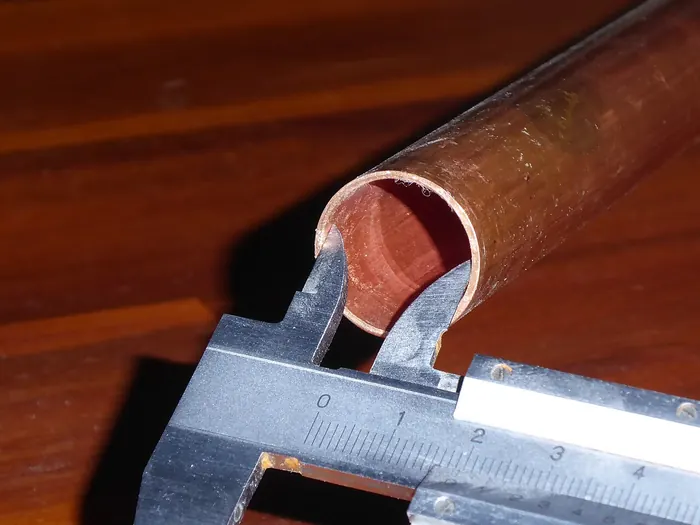 Pipe sizing basics for housesHow water supply pipe sizes for a house are chosen: code minimums, flow, velocity and pressure, and why the job belongs to a plumber.
- NSF/ANSI/CAN 61The health-effects standard for products that touch drinking water: what NSF 61 tests, what it covers and where codes require it.
- NSF/ANSI/CAN 372 (lead content)The standard used to certify plumbing products to the federal 0.25% lead-free limit, and how to read its marks.
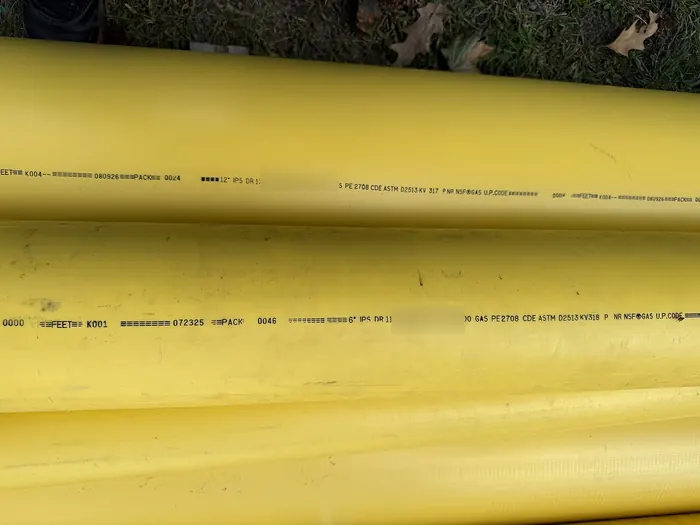 NSF/ANSI 14 (plastics piping)The NSF standard for plastic pipe, fittings and related materials, and what its pw, dwv and other end-use marks mean.
- Plumbing codes: IPC, UPC and IRCThe three main US model plumbing codes, who writes them, what each covers and how states and cities adopt them.
- Lead-free solderSolder and flux with no more than 0.2% lead, the only kind allowed on US drinking-water plumbing since 1986.
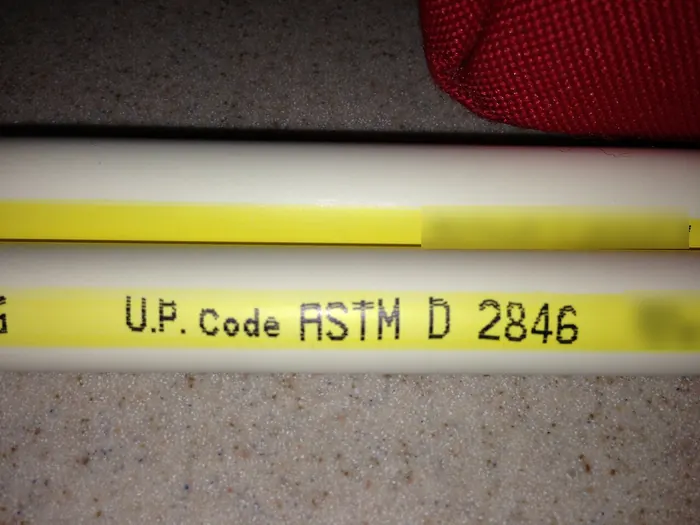 Reading the print line on pipeWhat the printed or stamped text along PEX, copper and plastic pipe means: size, standards, ratings, listings and date.
Did you know
- A 1-1/4 in PVC drain pipe measures 1.660 in across the outside, well over the size in its name. (source: Charlotte Pipe and Foundry) Read the entry
- Nominal 3/8 in PEX tubing holds about 54% of the water that 1/2 in tubing holds, so a home-run line can deliver hot water with less waiting. (source: Plastics Pipe Institute and Plastic Pipe and Fittings Association) Read the entry
- Some drinking-water products carry a "Q" value on the package, a lead test statistic that comes from the NSF/ANSI/CAN 61 lead leaching evaluation. (source: U.S. Environmental Protection Agency) Read the entry