Choosing pipe and trouble
Category · 6 entries · Updated
Practical entries for owners: how to tell what pipe a house has, which pipe suits which job, what cold and sunlight do to each material, what to do first when a pipe bursts, and why copper can develop pinhole leaks.
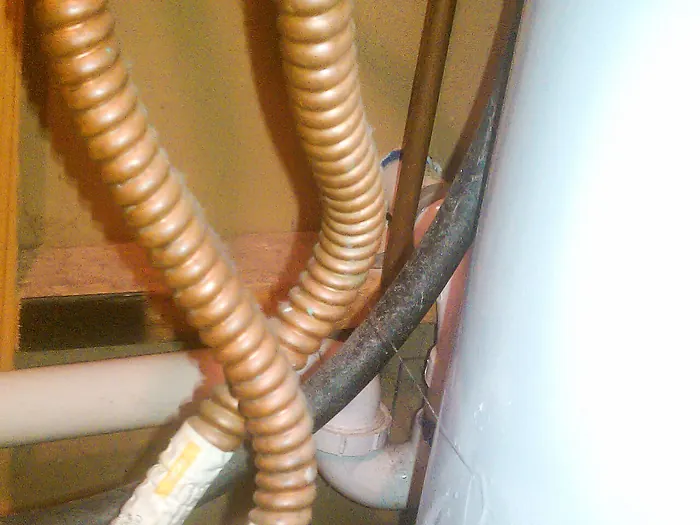
Entries in this category
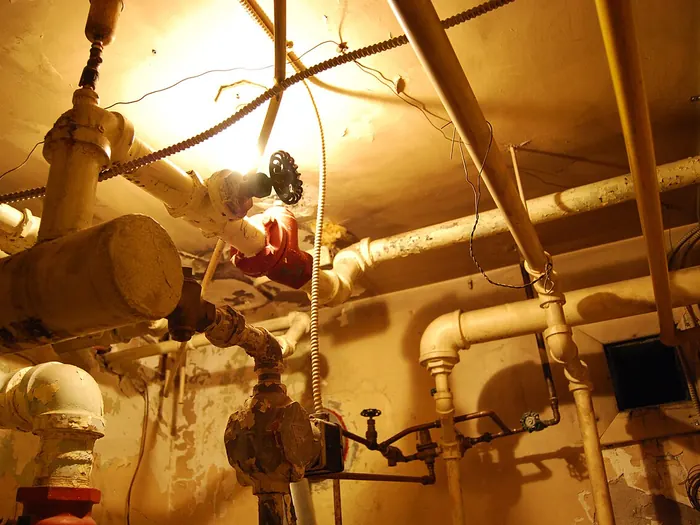 Identifying the pipes in your houseColor, scratch, magnet and print-line clues that tell lead, galvanized steel, copper, PEX, CPVC, PVC and ABS apart.
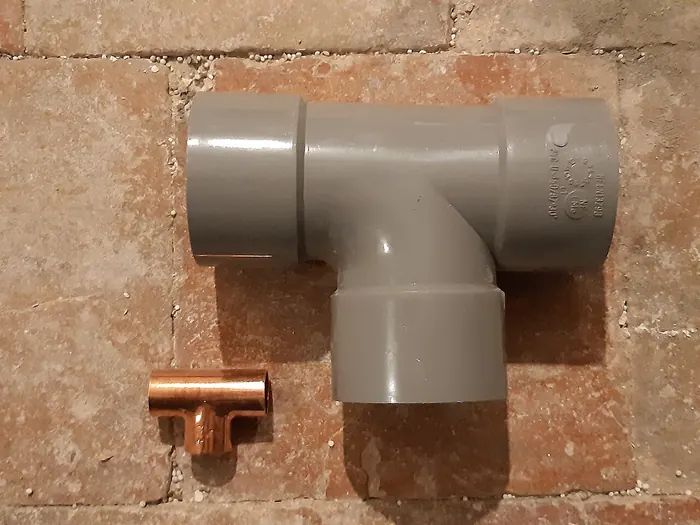 Which pipe for which jobA job-by-job guide to the pipe materials used for water supply, service lines, drains, vents and gas, with their main limits.
- Frozen pipes by materialHow PEX, CPVC, PVC and copper behave when the water inside them freezes, and why no pipe is freeze-proof.
- Sunlight and UV limits for plastic pipeWhat sunlight does to PVC, CPVC, ABS and PEX pipe, how long PEX may be exposed, and how outdoor runs are protected.
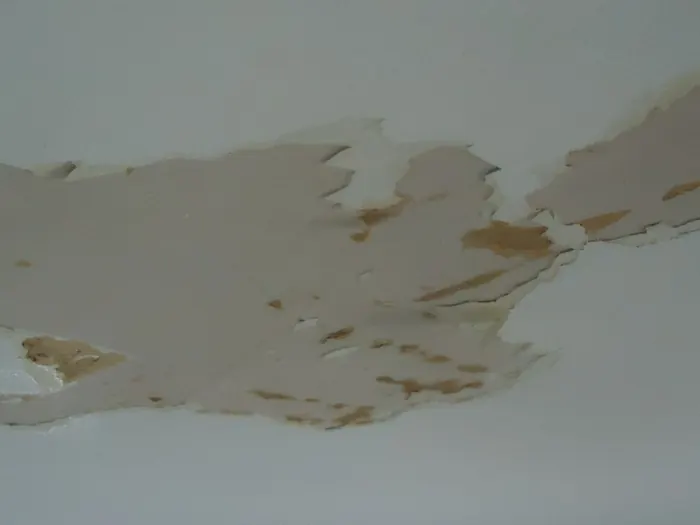 Burst pipe: first stepsThe order of priorities when a water pipe bursts: water off at the main, electricity safety, then a licensed plumber.
- Pinhole leaks in copper pipeSmall leaks in copper water tube caused by pitting corrosion, and the water, flow and workmanship factors linked to them.
Did you know
- A refrigerator magnet can tell lead from galvanized steel: both are dull gray, but a magnet sticks only to the steel. (source: U.S. Environmental Protection Agency) Read the entry
- Under EPA's lead rules, galvanized pipe that ever sat downstream of a lead service line is classed for replacement too. (source: U.S. Environmental Protection Agency) Read the entry
- The plumbing vents poking through many roofs are often black ABS, which survives sunlight because carbon black in the plastic screens out UV. (source: Plastics Pipe Institute) Read the entry