Fittings and valves
Category · 5 entries · Updated
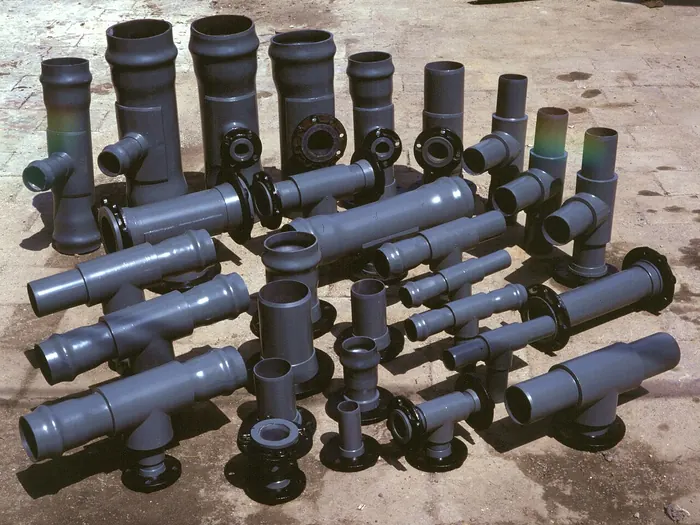
Fittings change direction, split flow, change size or join one material to another, and valves start and stop flow. Drain fittings follow different rules from pressure fittings because they must keep water flowing downhill and vent air.
Entries in this category
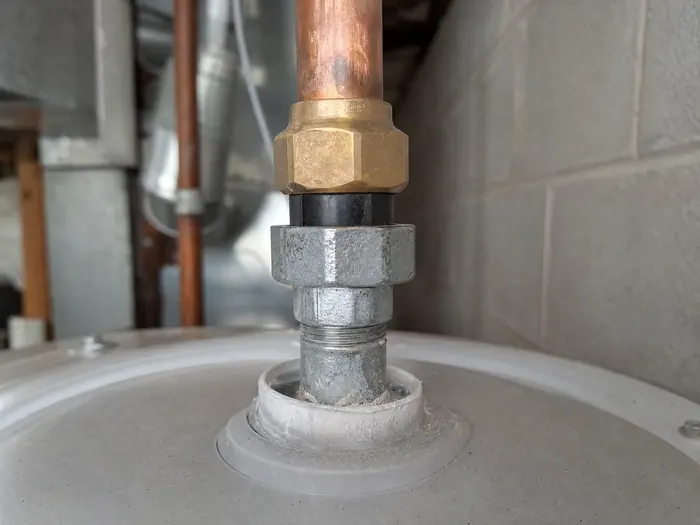 Dielectric unionsThe insulated union that joins copper to galvanized or other steel pipe to slow galvanic corrosion, and why it can still fail.
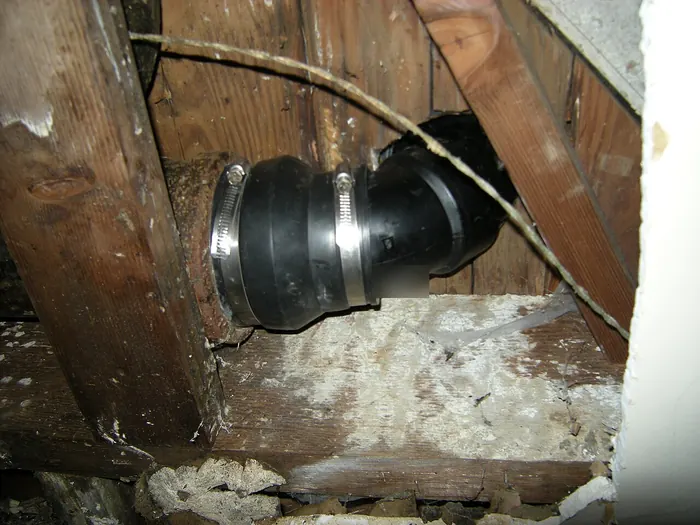 Transition fittingsAdapters, couplings and unions that join pipes of different materials or size systems, from CPVC-to-brass to plastic-to-cast-iron.
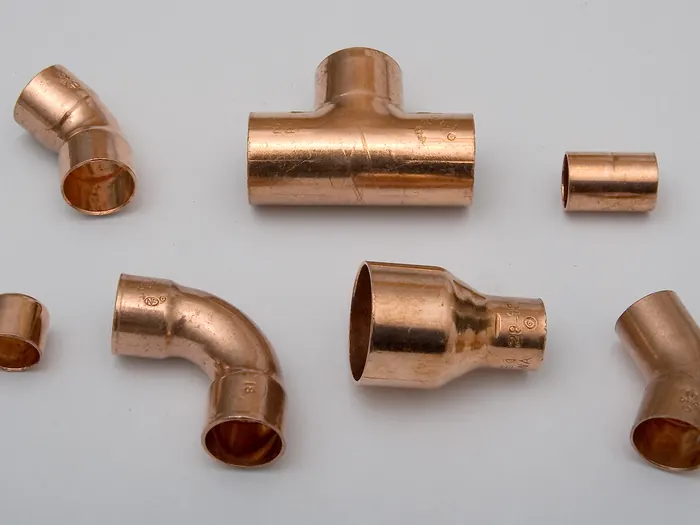 Fitting shapes: elbows, tees, couplingsThe basic shapes of pipe fittings, what each one does, the drain-fitting bend names, and the socket, spigot and thread end codes.
- Sanitary tees and wyesHow sanitary tees, wyes and combination wyes differ, and which drain direction changes each fitting is allowed to make.
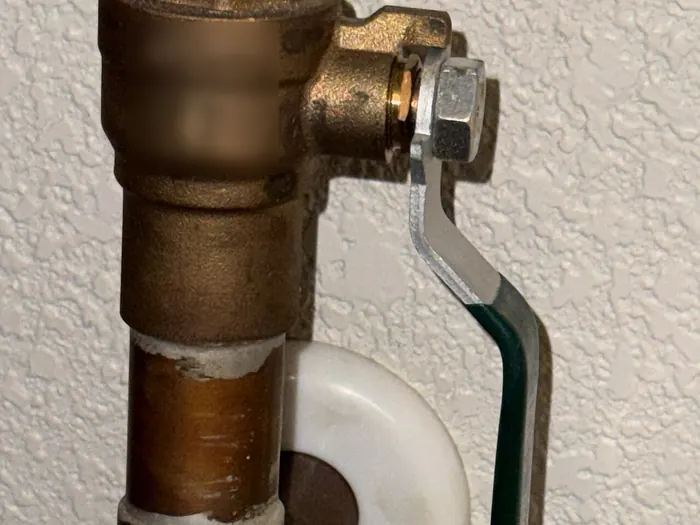 Shutoff valvesThe valves that stop water in a house: ball, gate and fixture stop valves, how they differ, and the rules that apply to them.
Did you know
- A dielectric union does not change the metals or the water; it works by removing just one of the three conditions galvanic corrosion needs, direct metal-to-metal contact. (source: National Institutes of Health) Read the entry
- Screwing a metal male thread into a plastic female fitting puts nearly all the stress on the plastic, because the metal end does not compress as it tightens. (source: Charlotte Pipe and Foundry) Read the entry
- Drain-fitting names count fractions of a circle: a "sixteenth bend" turns 22-1/2°, one-sixteenth of 360°. (source: Charlotte Pipe and Foundry) Read the entry